
Interest does not always become an immediate decision
People get busy, compare options, and need time to feel confident. A useful follow-up sequence helps them understand the next step without adding pressure.
Begin with a clear promise
Set expectations when someone joins your list or requests information. Tell them what they will receive, when they can expect it, and how it will help.
Answer the questions that slow decisions
Use real sales conversations to identify uncertainty. Your emails can explain the process, clarify who the service is for, and help the reader evaluate their options.
- What happens next?
- How does the process work?
- What should I prepare?
- Is this right for my situation?
Build a simple nurture sequence
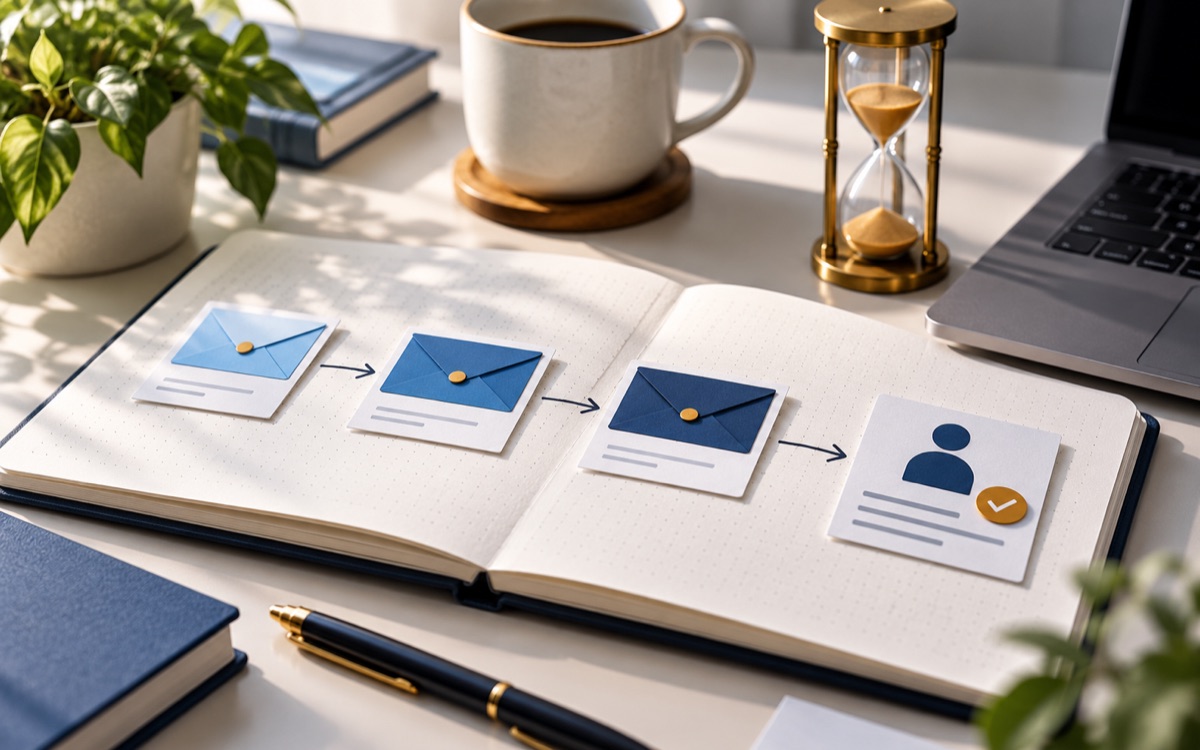
A practical sequence might include a welcome message, a useful resource, an explanation of your approach, a common-question email, and an invitation to talk. Each message should have one main purpose.
Segment when the difference matters
You do not need dozens of segments. Start by separating contacts when they have meaningfully different needs, interests, or stages in the customer journey.
Measure useful behavior
Open rates can be directional, but they are not the whole story. Review clicks, replies, booked calls, unsubscribe patterns, and the quality of the conversations that follow.
Helpful consistency earns attention
Good email follow-up is not a stream of reminders to buy. It is a planned set of useful messages that makes it easier for a prospective customer to understand, trust, and take the next step.